Dave Elman hypnosis: the legacy behind OMNI hypnotherapy
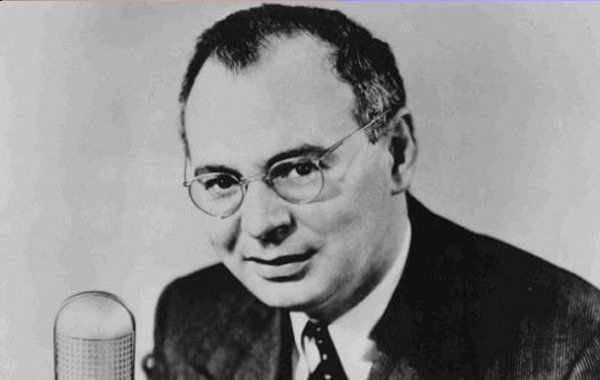
If you have spent any time around hypnosis, you have met the name Dave Elman. Dave Elman hypnosis stands for a way of working that is fast, practical and easy to teach, and it shaped the way hypnotherapy is practiced today. It also sits at the root of OMNI. This article follows the line from Elman to his student Gerald F. Kein and on to Hansruedi Wipf, who leads OMNI today, and shows what that legacy means for anyone who wants to learn hypnosis now.
The occasion was the Dave Elman Legacy Global Zoom Conference, held from June 11 to 13, 2021. Hansruedi Wipf spoke there about the legacy of the great masters of hypnosis, and in an interview before the event he explained what he inherited from Gerald F. Kein and how he has developed it further.
Who was Dave Elman?
Dave Elman began his career on the stage. He performed as a hypnotist in American vaudeville, where speed mattered and audiences wanted to see results. From 1949 on, he taught what he had refined there to a very different audience: physicians and dentists.
That shift is the heart of his legacy. Elman took hypnosis out of the entertainment world and into the treatment room. He showed medical professionals that hypnosis could be learned, used in a few minutes and applied to real problems. Many people regard him as one of the defining hypnotists of the 20th century.
The Elman induction: fast and practical
The technique most closely tied to his name is the Elman induction. An induction is simply the way a hypnotist guides someone into hypnosis. Some take half an hour. Elman’s takes around six minutes.
It combines eye closure, physical relaxation and mental relaxation in a short, clear sequence, and it checks along the way that the client is following. For a busy practice, that combination is valuable. The client reaches a useful state quickly, and more of the session is left for the actual work.
Short does not mean shallow. Its aim is a reliable state in which change becomes possible, not a show effect. That is why it is still taught, and why it remains the reference point for many rapid inductions that came after it. If you want to know more about those, read our article on rapid induction hypnosis.
Gerald F. Kein: from student to teacher
Gerald F. Kein, known to many simply as Jerry, learned the art of hypnosis at the age of 13, directly from Dave Elman. He refined Elman’s methods, expanded them and added to them. In 1979, he and his wife founded the OMNI Hypnosis Training Center in Florida, and he taught the method there. The name OMNI was his wife’s suggestion.
Through Kein, Dave Elman became a widely known name. And through Kein, OMNI came to stand for cause-oriented, uncovering hypnosis and hypnotherapy: a way of working that does not stop at the symptom but looks for where a problem began.
A short history of hypnotherapy, from stage to practice
Seen from a distance, the history of hypnotherapy in this lineage is a story of three steps.
The first step was Elman’s: hypnosis moved from the stage to the practice and the clinic. The second was Kein’s: the method became a structured curriculum with a clear focus on the cause of a problem. The third step is the one OMNI is taking today: the method is standardized so that it is taught the same way everywhere, it is quality assured, and it is open to research.
Each step kept what worked and added what was missing. That is the spirit in which Hansruedi Wipf describes his own role.
How Hansruedi Wipf carries the legacy forward
For almost three years, Gerald F. Kein prepared Hansruedi Wipf to lead OMNI. The handover was announced at the hypnosis convention in Boston in 2012 and completed by 2015.
Hansruedi Wipf describes his task in two parts. He wants to stay true to Kein’s legacy of cause-oriented regression that is easy to learn and effective. At the same time, he wants to keep writing the history of hypnosis. As he puts it, “if something works well, you should also be open to developing it further.”
New methods, same goal
With that in mind, OMNI added new methods to its training, among them HypnoWaving® (bilateral hemispheric stimulation), Parts Therapy and Ultra-Healing®. You can read how HypnoWaving® came about in our article on HypnoWaving®.
In the end, Hansruedi Wipf says, it is still about the same thing: helping a person quickly with hypnosis methods that are simple, reproducible and convincing. The simplicity of the methods and results that speak for themselves are, in his view, what will establish hypnotherapy in the long run.
Quality, research and access
Simply following in Kein’s footsteps would not have been enough, Hansruedi Wipf says. He set his own priorities, and Kein always encouraged him to develop OMNI further. The ISO 9001 certification of the training was one step. The HypnoScience® project with the University of Zurich was another, and the move to online training a third.
The research matters to him because hypnosis should be measurable and open to scientific review. The first results of the University of Zurich study were published in 2023 (de Matos et al., Frontiers in Human Neuroscience). They suggest that there is not just one state of hypnosis but at least two, and that they can be reproduced under comparable conditions. You can read more on our research page.
His other goal is access. He wants to make modern hypnotherapy available to a broad section of the population and to show that the solution to many everyday problems lies within people themselves. That is a call for personal responsibility, with the support of a competent hypnotherapist and alongside medical care where it is needed.
Methods that travel
Hansruedi Wipf also wants the regression methods to be part of the toolbox of every competent hypnotherapist, whatever their language or culture. The way there is standardization: clear, simple and understandable processes that lead to results you can reproduce and compare.
What Dave Elman hypnosis means for you today
If you learn hypnosis at OMNI, you learn in this line. The way OMNI guides clients into hypnosis is based on the methods of Dave Elman and Gerald Kein. The OMNI induction used in the University of Zurich study is the same one you learn in the training.
That gives you a practical advantage. You do not start with a loose collection of techniques. You start with a method that has been taught, tested in practice and refined over decades, and you learn it in a clear order: induction, deepening, testing, working at the cause.
At the time of the interview, Hansruedi Wipf had stepped back from day-to-day management to focus fully on training professional and competent hypnotherapists. His hope for the future is simple. He wants the many OMNI hypnotherapists to treat this legacy responsibly and to remember “that they are not only changing lives, but also the world.”
Your next step: start with Module 1: OMNI Hypnotist. You learn the OMNI induction, which is based on the methods of Dave Elman and Gerald Kein, online and at your own pace.