Rapid induction hypnosis: what flash hypnosis really is
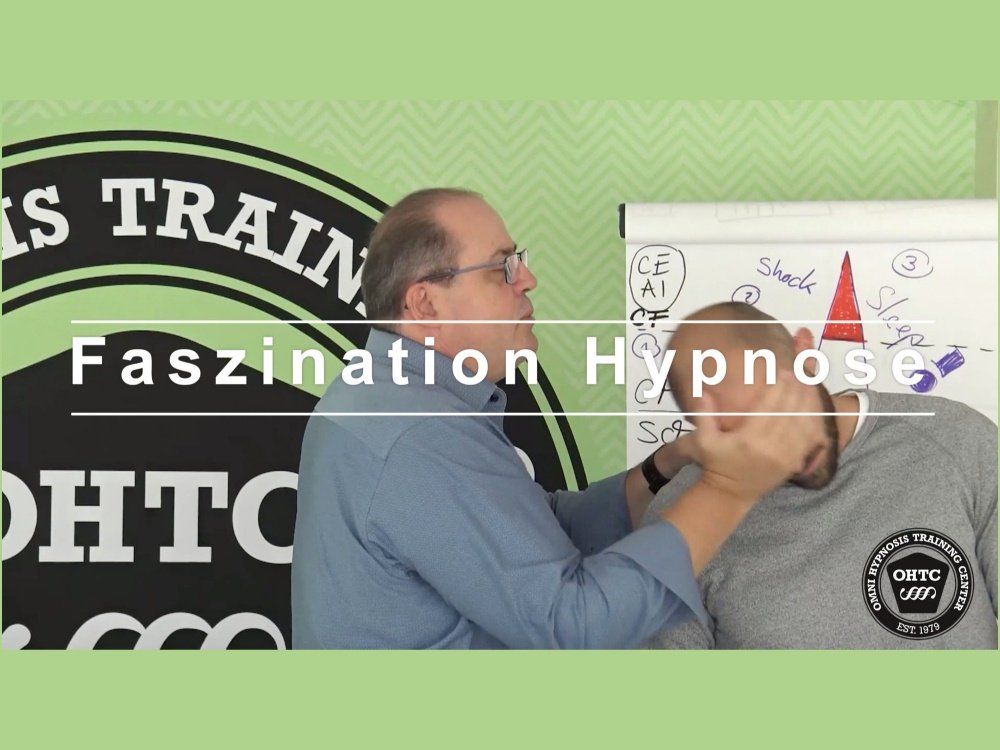
A hypnotist shouts “Sleep!”, and a volunteer on stage drops backward into waiting arms. It is a striking moment, and for many people it is the only picture they have of rapid induction hypnosis. No wonder some clients arrive at a hypnosis practice slightly nervous about it. This article explains what a rapid induction really is, clears up three common misconceptions and shows why it can be a useful tool in your sessions.
What rapid induction hypnosis is
Every hypnosis session starts with an induction. The induction is simply the method a hypnotist uses to guide someone into hypnosis. There are many of them, and they differ above all in length.
Some inductions take around 30 minutes. The Dave Elman induction takes about six. Flash hypnosis takes a few seconds. It is also called a flash induction, rapid induction or instant induction. All these names describe the same goal: to guide a person into hypnosis very quickly.
If you want to know where the fast inductions come from, read our article on Dave Elman hypnosis.
Why flash hypnosis has an image problem
Flash inductions are popular in stage hypnosis and street hypnosis, and it is easy to see why. A volunteer is hypnotized standing up, the hypnotist calls out “Sleep!”, and the person tips over backward. It looks dramatic, and it makes good television.
It also leaves an impression that these people are somehow “gone.” For anyone thinking about hypnosis for themselves, that impression can be unsettling. It has led to several misunderstandings about fast inductions. Here are the three we hear most often.
Three common misconceptions
Misconception 1: anyone who hears “Sleep!” falls into hypnosis
It is not that simple. A hypnotist could walk down a busy street, look people in the eye and shout “Sleep!” as often as they liked. Nobody would fall into hypnosis, and certainly nobody would fall over.
A flash induction follows a set pattern. The command “Sleep!” is one of four steps. It is an instruction to the subconscious to close the eyes and relax, and only together with the other three steps does it guide the person into hypnosis.
Just as important: the person has agreed beforehand to be hypnotized. That consent is the prerequisite, for a flash induction as for any other.
Misconception 2: you always fall over backward
There is no single flash induction. There are many variations. Hypnotizing someone standing and letting them tilt backward is one of them, and it is used on stage and in street hypnosis mainly for the show effect.
You can also hypnotize people standing up and have them remain standing. And there are many variations for a person who is already sitting or lying down. These are the ones that fit a hypnosis practice, whether in hypnotherapy or in hypnosis coaching.
This video shows several variations, standing and sitting: watch the video on YouTube.
Misconception 3: after a flash induction you are “gone”
It makes no difference whether it takes 30 minutes, six minutes or a few seconds to hypnotize someone. The state of hypnosis is the same.
No induction, however short or long, makes you unconscious or causes a blackout. People who are “flashed” simply go into hypnosis quickly. They are not asleep, and they are not gone.
Why an instant induction makes sense in your practice
Using a flash induction in a practice is not a gimmick. It has real advantages for you and your clients.
Your client stays awake. With an induction of ten minutes or more, a client can fall asleep. Then they are neither hypnotized nor “gone.” They are simply asleep, and you cannot work with them. With a flash induction, that does not happen.
The session time goes to the issue. Clients do not pay a hypnotherapist or hypnocoach for a long induction. They pay because they want their problem worked on. The shorter the induction, the more time is left for the actual work of resolving the client’s issue.
There is no room for doubt. Because the induction is so fast, the client has no time to wonder whether they can be hypnotized, whether it will work or what it will feel like. Their attention is fully on the hypnosis.
It fits the setting. A flash induction works with a client who is sitting or lying down, so it fits naturally into a therapeutic session.
What makes a rapid induction safe and respectful
The speed of a flash induction is not its most important feature. Trust is. Before any induction, your client should know what hypnosis is, what it is not and what will happen next. When they have agreed, and when their questions are answered, a rapid induction is simply an efficient way to begin.
Handled this way, a flash induction feels less like a trick and more like a smooth start. And for the hypnotist, it has one more advantage that the stage shows get right: flash hypnosis is fun.
Learning rapid induction hypnosis
A flash induction looks effortless, but it rests on a solid foundation. You need to understand the state of hypnosis, lead a clean standard induction, deepen the state and test it. Only then does speeding up the process make sense.
That is how the OMNI training is built. In Module 1, you learn the basics: induction, deepening and testing. Module 2 builds on it. There you refine your inductions, speed up how the trance builds and learn to use instant and waking hypnosis responsibly. With the certificate from Module 2, you are a Certified OMNI Hypnocoach, and the path is open to Module 3.
Your next step: see Module 2: OMNI Hypnocoach to find out how you learn instant hypnosis online and what else the module covers.