How does hypnosis work? A clear answer from Hansruedi Wipf
You have probably heard about hypnosis, maybe read about it or seen it on television. Perhaps you are curious for personal reasons, or you are thinking about using it in your work. Either way, one question comes first: how does hypnosis work? This article answers it in plain language, and it also covers what hypnosis can be used for, who can learn it and where its limits are.
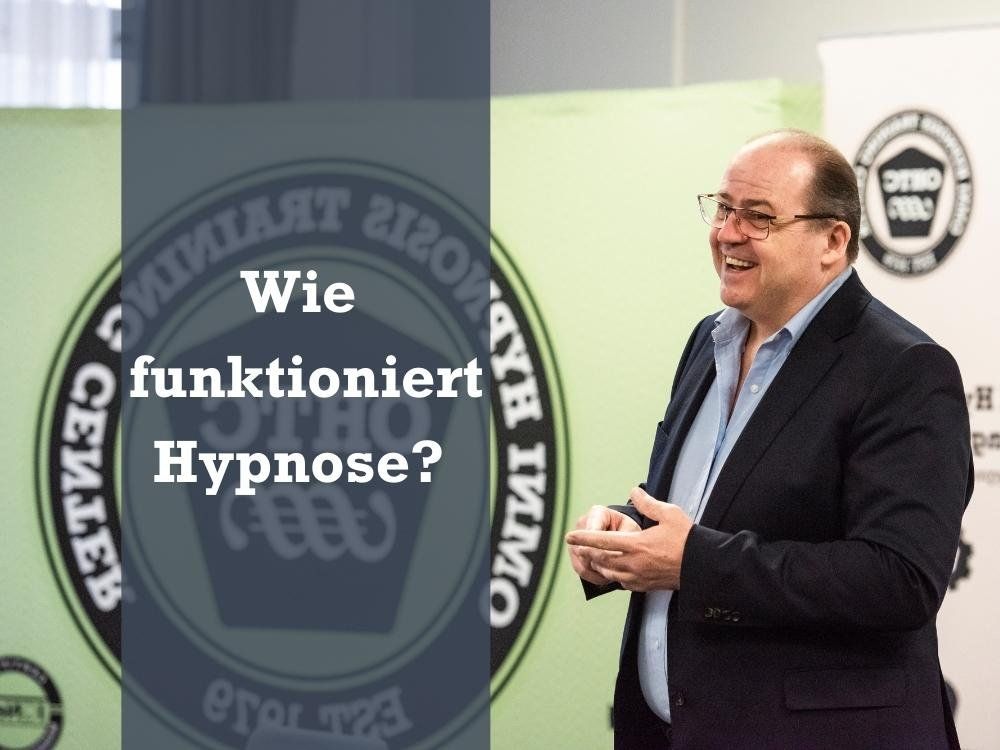
The explanation comes from Hansruedi Wipf, owner and president of OMNI Hypnosis and author of the German-language book Hypnose, Gesundheit und Heilung auf natürlichem Weg (Giger Verlag). He has also recorded a video on the topic that you can watch alongside this article.
What is hypnosis?
Start with a surprise: you already know the state of hypnosis. You pass through it every day, usually without noticing. You drive a familiar route and arrive with no memory of the last few miles. You are so absorbed in a book that you do not hear your name. In these moments, your attention narrows, and the part of your mind that usually comments on everything steps back.
Hypnosis uses that natural state on purpose. It is not sleep, and it is not a loss of control. And it is far less spooky than most people think.
How does hypnosis work? The Mind Model
In the OMNI training, we explain what happens during hypnosis with the Mind Model of Gerald F. Kein. It rests on one definition. Hypnosis is the state in which the critical factor of the conscious mind is bypassed and selective, acceptable thinking and feeling is established.
That sentence is dense, so let us take it apart.
The critical factor, your mind’s doorman
Your conscious mind is the part of you that analyzes, compares and judges. It is useful, but it has limits. It makes mistakes, it follows its own logic, and that logic is not the same as the logic of your subconscious.
Between the two sits what the Mind Model calls the critical factor. Think of it as a doorman, or a firewall. It checks every new idea against what you already believe and turns away whatever does not fit. That is why you cannot simply decide to stop being afraid of spiders. The doorman knows better.
In hypnosis, the doorman steps aside. He does not leave. He watches from the sidelines, calm and passive, while the subconscious moves into the foreground. Now direct communication with the subconscious becomes possible.
Why the subconscious matters
The subconscious holds your habits, your emotional memories and the automatic reactions you never chose on purpose. Many problems that feel stubborn live there, which is why willpower alone so often fails against them.
When the critical factor is bypassed, a trained hypnotist can work with that level directly, without the rational part of the mind interrupting every step. That is hypnosis explained in its simplest form: a focused state in which change becomes easier to accept.
From a state to real change
Reaching hypnosis is only the beginning. What matters is what you do with it.
In the OMNI method, the aim is to get to the core of a problem: its cause, its root. A good hypnotist, hypnocoach or hypnotherapist lets the subconscious lead the way to that cause during the session, then uses specific techniques to neutralize it. The idea behind it is simple: a symptom that has lost its cause has lost its footing.
This is the principle behind OMNI hypnosis: work on the cause, not only on the surface.
Who can use hypnosis, and when
People often ask who can learn hypnosis and when it makes sense to use it. The short answer: almost anyone can learn it, and there are many ways to use it.
What matters is solid training. The OMNI training is ISO 9001 certified. It follows the same structure wherever it is taught and gives every student carefully prepared materials. Students learn online or in person. They gain practical knowledge, understand how the conscious and subconscious mind relate to each other and learn to work with people. That practical focus is central to the training.
The people in our courses come from many backgrounds: physicians, therapists of every kind, alternative practitioners, nurses and other health professionals, as well as managers and people who are simply curious about the mind. Sports coaches and leaders use it too.
What hypnosis is not
One part of the training is the same for everyone, and it bears repeating. A hypnotist, hypnocoach or hypnotherapist does not replace a doctor. They do not diagnose, and they do not prescribe medication.
Hypnosis is not a miracle cure, and it is no substitute for medication, vaccinations or conventional treatment. As a complement to licensed medical care, however, working with a well-trained hypnotherapist can make a lot of sense. If you have a health concern, talk to your doctor first.
Where hypnosis is used
OMNI hypnotherapists use hypnosis in their practices, in hospitals and with their clients for a wide range of concerns. Among them: sleep problems, fatigue and exhaustion, low mood, recovery from sports injuries, fibromyalgia, managing emotions, lack of motivation, test anxiety, fears and phobias, allergies and addictions.
The list could go on. Where a medical condition is involved, hypnosis works alongside medical care, not instead of it. If you want to see what this looks like in practice, the OMNI YouTube channel shows many examples.
The short version
Hypnosis is a natural state that bypasses the critical factor of the conscious mind. In that state, the subconscious becomes accessible, and a trained practitioner can help find and neutralize the cause of a problem. Almost anyone can learn it: physicians and therapists, leaders and sports coaches. And it can be used in many areas, always within clear limits.
Now you know how hypnosis works, who uses it and when it makes sense. The remaining question is whether you want to try it yourself.
Your next step: register for Try before you buy, ten free lessons from Module 1. You learn the key terms of hypnosis, the words to avoid in a session and the Mind Model of Gerald F. Kein, on your computer or phone.