Hypnosis for executives: how one manager found his calm
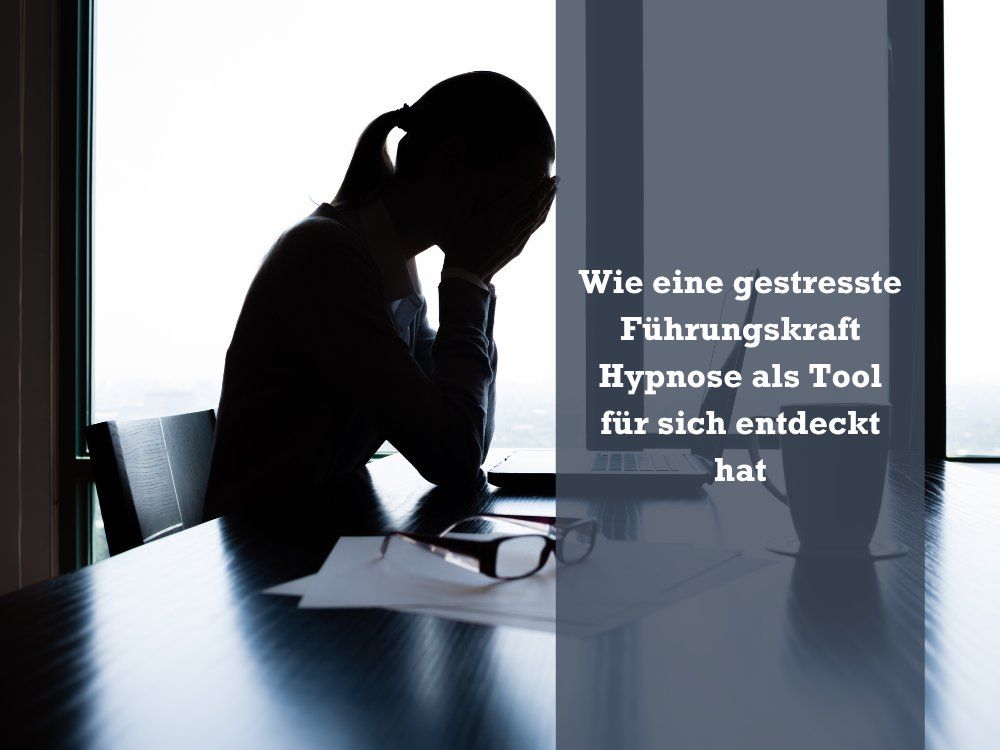
Running a team is demanding. You carry responsibility for results, for teams, sometimes for whole departments. The more the pressure builds, the more strongly emotions come up, and the harder it becomes to keep them in check. That is why hypnosis for executives is more than a wellness topic. It can help leaders understand why they react the way they do under stress, and change it. We have trained over 20,000 people in hypnosis, and our practice has many stories to tell. Here is one of them.
Hypnosis for executives: one case from our practice
Some time ago, a manager from a bank came to us. In stressful situations, he was prone to outbursts of anger in front of his employees. He had been told that one more incident would have consequences for his job. That is when he looked for help.
In the first session, it became clear that the outbursts were only a symptom. They gave his subconscious, which was under constant pressure, at least some temporary relief. The real question was where that pressure came from.
Finding the cause
In hypnosis, the manager went back to an experience from early childhood that had caused him frustration ever since. He had never been able to process it, because he no longer remembered it consciously. The feelings from back then were powerlessness, disappointment and the sense of not being accepted. They were the same feelings that came up in stressful situations at work, and they were what led to the outbursts.
Hypnosis made it possible to reach memories he had not stored consciously. That is true for all of us: much of what shapes our reactions happens outside of awareness. Once the memory was accessible, he could recognize the emotions connected to it and neutralize them, with the reasoning of the adult he is today.
What changed
After his hypnosis sessions, the manager was able to handle stressful situations at work constructively. The atmosphere in his team improved, and so did his employees’ satisfaction.
One thing is worth emphasizing: in the end, he helped himself. He allowed hypnosis to support him in the search for the subconscious reasons, but the change was his. That is always the case in hypnotherapy. As we described in our article on hypnosis in medicine, good hypnosis lives from the cooperation between hypnotherapist and client.
We were particularly pleased by what happened next. A few months after his sessions, the manager signed up for the OMNI hypnosis training himself, to build on what he had experienced.
Why stress management for leaders starts inside
Most stress management for leaders focuses on the outside: time management, delegation, better meetings, clearer priorities. All of that helps. But when the same reaction comes back again and again, whether it is anger, anxiety before presentations or the inability to switch off, the cause is often older than the job.
It is remarkable how much early experiences shape people, and how often we stay stuck in patterns that could be changed. Hypnosis gives access to the level where these patterns live.
For leaders, this matters twice. Your reactions affect not only you, but everyone who works with you. A leader who stays calm under pressure makes it easier for the whole team to do the same.
Hypnosis for burnout prevention
Chronic stress does not only strain relationships at work. Over time, it can wear you down. Constant pressure without recovery is one of the paths into exhaustion.
Hypnosis for burnout prevention works on two levels. It helps you recover in the middle of demanding days, and it helps you change the inner patterns that keep you under pressure in the first place.
Self-hypnosis is especially useful here. It takes a few minutes, needs no equipment and can be used between meetings, before a difficult conversation or at the end of the day. That is also why we increasingly work with companies and teach their employees self-hypnosis as a tool for everyday work. You can read more about this in our article on hypnosis for workplace stress.
If you already feel exhausted, have slept badly for weeks or notice physical symptoms, see your doctor first. Burnout can overlap with depression and physical illness, and it needs a proper assessment. Hypnosis can then be part of your recovery, alongside medical care. Our article on hypnotherapy for burnout explains how that can work.
What a session looks like
Many leaders hesitate because they worry about time, privacy or losing control. None of these has to stand in the way. A session is confidential and usually begins with a conversation about what you want to change. Then the hypnotherapist guides you into hypnosis, a state of focused attention. You stay aware, you hear everything, and you can stop at any time.
What happens next depends on your goal. When a reaction like anger or anxiety keeps coming back, the work often goes back to where it began, as in the case above. Many clients also learn self-hypnosis along the way, so that they have a tool of their own for the weeks after. Most sessions fit into a normal working day, and afterward you go back to your life, often with a clearer head.
What leaders can take from this case
Three lessons stand out. Anger, anxiety and tension under pressure are signals, not character flaws. The cause of a reaction is often not where it shows up. And asking for help is not a weakness.
The manager in this story took that step when his job was on the line. You do not have to wait that long.
Your next step: start with Module 1: OMNI Hypnotist. You learn the foundations of hypnosis, including self-hypnosis for focus and relaxation, online and at your own pace.