Mental training for athletes: where mental strength begins
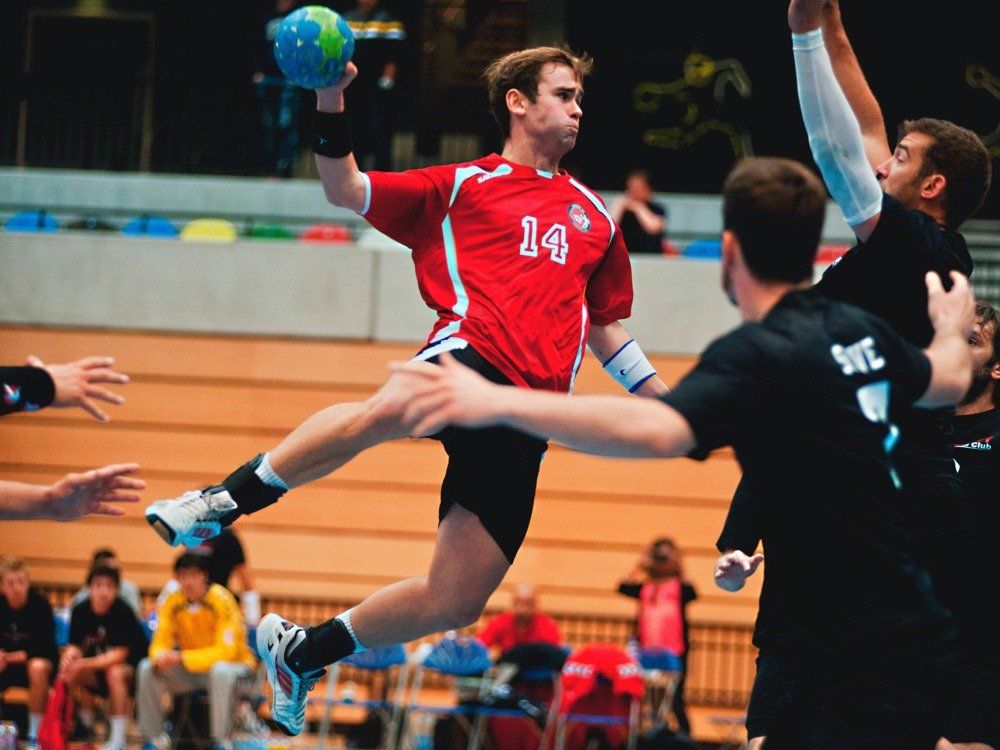
Where are important matches and major competitions decided? In the head, of course. Everyone knows that. But the word “head” is misleading, because it suggests logic and reason. Mental training for athletes only works when it reaches the place where performance is really decided, and that place is not the rational mind.
This article is based on the experience of Adrian Brüngger, HypnoSport® instructor and former head coach of the first team of handball club Pfadi Winterthur, Swiss champion and Coach of the Year 2021. He explains where mental strength comes from and how it can be trained.
Why good days and bad days feel random
Most athletes cannot rationally explain why they had a particularly good or a particularly bad day. Hard work and hard training are the entry ticket to the top level. Once those conditions are met, the result depends to a large extent on how the athlete feels on the day of the competition.
Ask about an exceptional performance, and you usually hear something like this: “I don’t know exactly, today I just had a great feeling, it went by itself.” Ask about a bad day, and the answer sounds similar, only reversed: they do not know what happened, they felt blocked and could not shake it off.
The missing piece in mental training for athletes
The sports world is always looking for improvement: new training methods, more refined tactics, more volume, better nutrition. Look at an athlete’s training plan, and you find hundreds of hours of performance testing, athletics, technique, tactics, recovery and nutrition.
Everyone agrees that the emotional state makes the difference. Yet when, where and above all how is mental strength trained? For many athletes, there is still no satisfying answer.
In individual sports, working with a sports psychologist or mental coach is now common. Team athletes often still react with resistance. “I don’t have a problem and I’m not ill!” is a sentence Adrian Brüngger hears often. And some individual athletes drift away from classic mental training over time because they are not satisfied with the results.
Where mental strength comes from
Adrian Brüngger defines mental strength as the ability to reach your full potential at important competitions, no matter where and under what conditions. A mentally strong athlete can put themselves into their best performance state and deliver when it counts.
To understand where that ability comes from, look at how the mind is built. With the conscious mind, we think logically, analyze and use our willpower.
The deciding factors for mental strength, however, sit in the subconscious. That is where emotions live, from fear and anger to trust and self-confidence. It holds our habits, our long-term memory with every experience we have ever made, and our self-protection.
Here is the catch: we cannot change the subconscious from the conscious mind. Have you ever talked yourself into self-confidence? Have you ever fallen in love on purpose? No matter how strong-willed you are, these things do not happen by decision. And under pressure, the subconscious takes over, and conscious control slips away.
Mental strength comes from the subconscious, just like mental weakness.
That is why, in Adrian Brüngger’s view, hypnosis belongs in sport. It works directly with the level where lasting change happens.
Building a peak performance mindset with HypnoSport®
With HypnoSport®, OMNI has developed techniques to prepare and train the subconscious for competition. Qualities that can be strengthened include self-confidence, focus and concentration, dealing with negative experiences, composure, the ability to push through pain and fatigue, team spirit, fighting spirit, the will to win and mental toughness.
The crucial point: with a little practice, athletes can call up the feelings they want in a competitive situation. Adrian Brüngger calls it “the perfect feeling at the touch of a button.” An athlete who can do that is no longer at the mercy of their emotions. When everything is at stake, that ability can decide the outcome.
Everyone can improve
Just as with coordination, technique or tactics, some athletes have more mental talent than others. That does not decide who can grow.
Everyone can improve: those with poor prerequisites as well as the mentally gifted.
Consider how many hours of training it takes to gain a few percentage points at the highest level. Measured against that, mental work is a worthwhile investment. In Adrian Brüngger’s experience, a small number of sessions can make a noticeable difference.
Injuries and the protective subconscious
Some athletes get injured again and again, and rarely in the same place. First a torn ligament, then a herniated disc, then the hip. Sometimes the body is simply not built for the strain of top-level sport. But in Adrian Brüngger’s experience, the cause can also lie in the subconscious.
One of the main tasks of the subconscious is to protect us from danger.
Self-protection is powerful, and it cannot tell real danger from imagined danger. After a serious injury, the subconscious may conclude that the sport itself is dangerous. Fear or even panic then keeps the athlete from performing freely again. The subconscious may also try to spare the athlete a pressure situation they do not feel ready for, and an injury is one way to avoid it. Often, such a pattern goes back to a strong, unresolved emotion that was stored long ago and linked to sport.
Cause-oriented hypnosis looks for that source. Two things matter here. Injuries belong with the medical team first, and pain that lingers after an injury always needs medical assessment. Hypnosis works alongside that care, on the emotional side of the injury, and never replaces it.
Blockages and the “winner gene”
Sport is full of emotion. Joy, hunger for victory, euphoria and pride alternate quickly with disappointment, anger, fear and frustration. We learn most efficiently through emotions. What comes with strong feelings is stored deeply, and when it repeats, it becomes a program that runs on its own.
That is how athletes with the so-called winner gene are made: the ones who play their best when it matters most. And it is how the opposite pattern forms. An athlete who heard as a child that nothing they did was good enough is more vulnerable to a fear of failure than someone who grew up with success and encouragement. A single bad experience can then activate the old program, and the fear can harden into a complete block.
The way out is to resolve the problem at its source. Here, Adrian Brüngger says, working with an athlete is hardly different from working with any other client.
Sports psychology and hypnosis: the athlete stays in charge
Athletes are determined, proud and focused on results. The expectations of spectators, coaches and sponsors are high, and the pressure to perform is constant. Athletes need success, and they need independence.
Hypnosis can support both, and it fits well next to sports psychology and mental coaching. Where a sports psychologist works through conversation, reflection and routines, hypnosis adds direct work with the subconscious. The two approaches complement each other.
The athlete is independent of his sports hypnosis therapist or coach at all times.
The athlete gets the tools and uses them on their own. Hypnosis does not score goals, and it does not win competitions. Used well, it helps the athlete reach their best possible performance, while they remain responsible for their own actions at all times.
For Adrian Brüngger, that is what makes the work rewarding: helping individual athletes and whole teams succeed, and sharing in their emotions along the way.
Your next step: in the OMNI Academy catalog, you find the expert lecture DL228 Sports Improvement, on using hypnosis to support athletes in training and competition.