HypnoScience®: what research shows about states of hypnosis
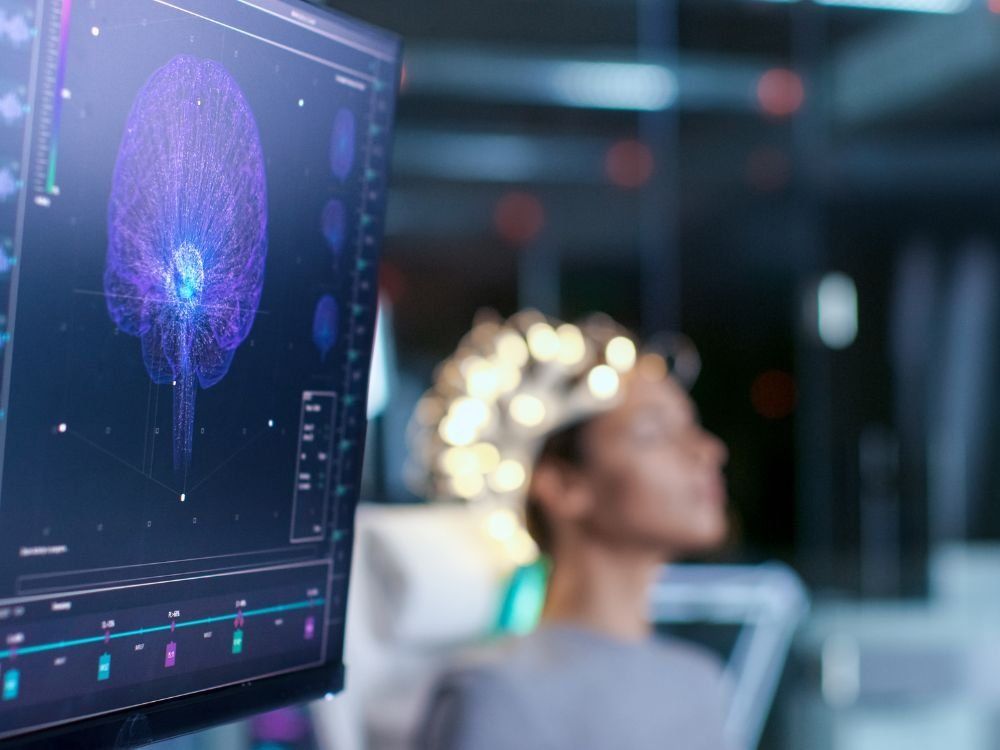
Hypnotists have described different depths of hypnosis for a long time. Clients notice them too: some sessions feel light, others feel far away. But is hypnosis depth only a feeling, or does it show up in the brain? That is one of the questions behind HypnoScience®, a research project that OMNI Hypnosis International started together with the University of Zurich. Its aim is to understand the different states of hypnosis and the mechanisms behind them, and to help hypnosis and hypnotherapy gain wider acceptance.
How the HypnoScience® study was done
The study was carried out by independent scientists at the University of Zurich and approved by the Ethics Committee of the Canton of Zurich, Switzerland (BASEC No. 2018-00550). The first results were published on December 19, 2023, in the journal Frontiers in Human Neuroscience (de Matos et al.).
The project, titled “Multimodal Investigation of Distinct Hypnotic States,” combines three methods. An fMRI study looks at activity patterns across the whole brain and at how brain networks work together. A second study uses magnetic resonance spectroscopy (MRS) to measure chemical substances in different brain regions, non-invasively. A third study uses EEG to examine electrical activity in the brain with high temporal resolution.
Why combine three methods? Each one sees something different. fMRI shows where activity changes and how brain regions work together, but it reacts relatively slowly. EEG captures fast changes from moment to moment. MRS adds the chemical side. Together, they give a fuller picture than any single method could.
All participants took part in all three measurements. They were hypnotized by five trained OMNI hypnosis experts using standardized inductions. The OMNI induction used in the study, based on the methods of Dave Elman and Gerald Kein, is the same one you learn in the training.
Two states of hypnosis
The central finding: hypnosis is visible and measurable in the brain, and the results show that at least two distinct hypnotic states exist. They are called somnambulism and the Esdaile state.
Both terms come from hypnosis practice. Somnambulism describes a deep state of hypnosis. The Esdaile state is named after James Esdaile, a 19th-century Scottish surgeon, and describes an even deeper state. Whether such states are truly distinct, or only points on a scale, is a debated question in science. That is what makes the result interesting.
The fMRI data showed that the functional networks in the brain change in distinguishable ways at these two depths. The researchers compared the same participants in a control state and in hypnosis. In other words, the difference between the two states was not only something the participants reported. It was visible in the scans.
Parallels to anesthesia and altered perception
Two further observations stood out. Brain patterns in somnambulism showed similarities to those under propofol, a common anesthetic; the reasons need further research. In the Esdaile state, participants reported subjective changes in perception, such as body boundaries dissolving, deep relaxation, losing their sense of space and time, or inner images. Whether this is linked to the measured changes in the brain cannot yet be said with certainty. For the current state of research with all three publications, see Hypnosis research.
These are parallels, not equations. Hypnosis is not anesthesia, and it is not a drug state. People in hypnosis stay aware, hear everything and can end the session at any time. The researchers themselves stress that further research is needed to confirm these hypotheses.
What this means for hypnosis depth
For practitioners, the question of depth is practical. How deep does a client need to go for a particular kind of work? And how do you know where they are? Many hypnotists use simple tests along the way to check the depth, and deepening techniques to guide clients further when the work calls for it.
The HypnoScience® results suggest that the states described in practice have a counterpart in the brain. That does not settle every question. But it gives the experience of practitioners and clients a new point of contact with research. It also opens up new questions: how the states differ in detail, how stable they are, how quickly people move between them, and what they mean for specific applications. Answering them will take more studies, ideally with more participants and in different settings.
What the study does not show
It is just as important to be clear about the limits. The study describes hypnotic states and what happens in the brain. It does not test hypnotherapy as a treatment for any condition, and it does not compare different methods of hypnosis. Nobody should read it as proof that a particular therapy works.
What it does show is that hypnosis is more than imagination or role play. Something measurable happens in the brain, and it differs between states.
Why OMNI supports research
OMNI supports research into hypnosis like no other institute. The reason is simple. In conventional medicine and academia, hypnosis is still often seen as taboo or esoteric, even though clinical studies show good evidence for its use in areas such as pain, anxiety and irritable bowel syndrome. Research can help change that view, by describing what actually happens.
A long-term goal of the project is for health insurers to recognize hypnosis as a form of therapy. For the over 20,000 people who have trained in the OMNI method, it also means something closer to home: being able to explain their work with confidence, including when they work with physicians and other health professionals.
Hypnosis as a method is being researched scientifically, and HypnoScience® is one contribution to that research. You can read more about the three studies and their sources on our research page.
Your next step: start with Module 1: OMNI Hypnotist. You learn the OMNI induction used in the study, including how to test and deepen hypnosis, online and at your own pace.
Sources
de Matos et al. (2023). Frontiers in Human Neuroscience. Read the study
de Matos et al. (2024). Scientific Reports.
Niedernhuber et al. (2024). Cortex.