Become a hypnotherapist: what the path really looks like
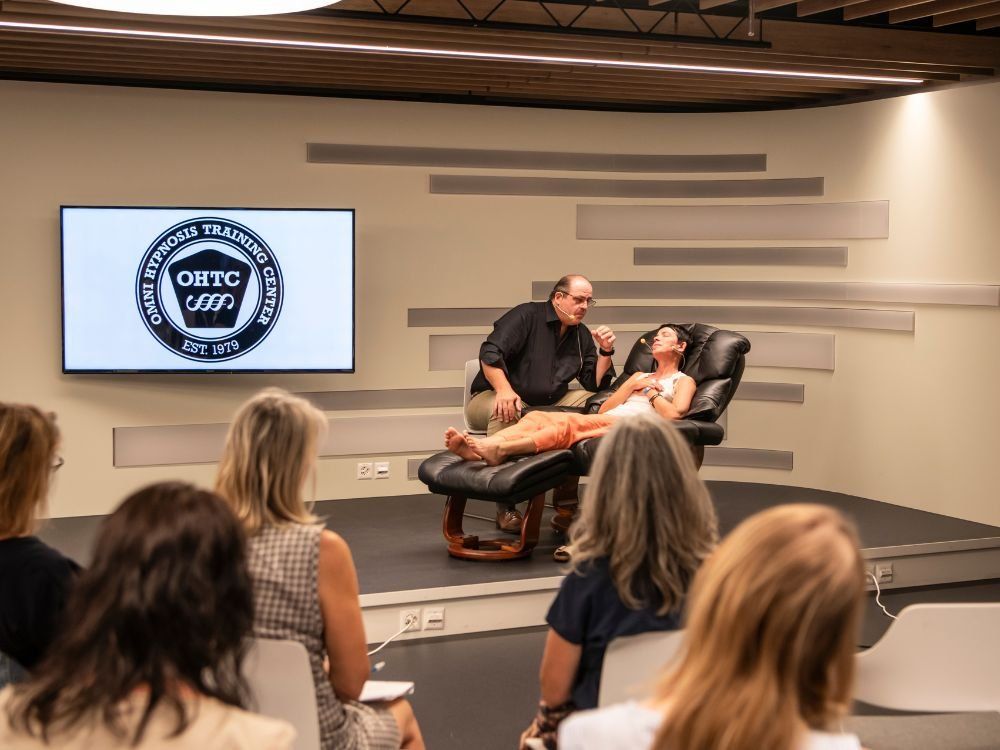
Maybe you already work with people, as a coach, nurse, therapist or teacher, and you keep meeting problems that conversation alone does not reach. Maybe you are looking for a second career with more meaning. Or maybe you experienced hypnosis yourself and want to understand how it works. Whatever brought you here, if you want to become a hypnotherapist, you deserve a clear picture: what the work is, what the training involves and what it takes to turn it into a career.
What hypnotherapists actually do
A hypnotherapist helps clients make changes they have not been able to make with willpower alone. Typical topics include stress, fears and phobias, sleep problems, habits such as smoking, test anxiety and performance in sport or at work.
In the OMNI method, the focus is on the cause. The hypnotherapist guides the client into hypnosis, a state of focused attention, and follows the subconscious back to the experience where a problem began. There, the emotion connected to it can be resolved. This approach is called Regress to Cause (R2C) and Fix it®.
What hypnotherapists do not do is just as important. They do not diagnose, they do not prescribe, and they do not replace doctors or psychotherapists. Where a medical or psychiatric condition is involved, hypnosis works alongside professional treatment, never instead of it. Knowing where your role ends is part of doing the work well.
An example from sports hypnosis
Sport shows what this work can look like. After a series of disappointing races, the Swiss ski racer Niels Hintermann had a session with Adrian Brüngger, co-owner and CEO of OMNI Hypnosis. Together with his classic mental training, it helped him find his way back. He went on to win a downhill race in Norway, and his story received a lot of attention in the press, on the radio and on TV.
OMNI’s own comment at the time put it well: HypnoSport® helped, but he still skied the race himself. That is a fair summary of what hypnosis does. It does not do the work for anyone. It helps people use what they already have.
A hypnotherapy career: who it suits
People come to hypnotherapy from many backgrounds: physicians, psychologists, nurses, dentists, coaches, teachers, sports coaches, and people who want a new direction in life. Some add hypnosis to an existing profession. Others build a practice of their own, often part-time at first.
A hypnotherapy career suits you if you are curious about people, can listen without judging and stay calm when emotions run high. It also asks for a willingness to keep learning, and for the discipline to work within clear boundaries.
The OMNI hypnotherapy training in three modules
The OMNI hypnotherapy training is built in three steps. You can take them one at a time or as a complete program.
Module 1: OMNI Hypnotist. The foundations: inductions, deepening, testing, safety, ethics and self-hypnosis. Online in 40 lessons, about 20 hours, USD 375, with the OMNI Hypnotist certification.
Module 2: OMNI Hypnocoach. You go deeper: levels of hypnosis, instant and waking hypnosis, client conversations and interventions. Online in 52 lessons, about 40 hours, USD 1,190.
Module 3: OMNI Hypnotherapist. The OMNI hypnotherapy process, including Regress to Cause (R2C) and Fix it®, the Esdaile state, pain management, and laws and regulations. Online in 40 lessons, about 60 hours, USD 1,850, or live in the USA, with a final exam. You finish as a Certified OMNI Hypnotherapist, with the certificates of NGH and IBHEC.
If you prefer one path from start to finish, the OMNI Online Bundle includes all three modules online for USD 2,750. There is also a hybrid program with four live days and an eight-day Intensive, both in the USA. The OMNI hypnosis training and the OMNI hypnotherapy process have been ISO 9001 certified since 2015, and over 20,000 people have trained in the OMNI method.
What to consider before you start
A certificate is a beginning, not a guarantee. Three points are worth thinking about honestly.
The rules depend on where you work. The legal framework for hypnotherapy is not the same everywhere. In the US, it varies from state to state. Find out what applies where you want to practice. Module 3 covers laws and regulations, but the responsibility for your practice is yours.
A practice takes time. Clients do not appear on the day you receive your certificate. Building a practice means finding your focus, becoming visible and earning trust, usually over months rather than weeks. Many hypnotherapists start part-time, next to their existing work.
Practice makes the difference. Knowledge alone does not make a good hypnotherapist. Sessions do. The more you practice, ideally with feedback from experienced colleagues, the more confident you become.
What research says about hypnosis
If you become a hypnotherapist, people will ask you whether hypnosis really works. It helps to know the facts. Hypnosis as a method is being researched scientifically. OMNI supports research into hypnosis like no other institute.
A study by independent scientists at the University of Zurich, approved by the Ethics Committee of the Canton of Zurich, found that hypnosis is visible and measurable in the brain and that it changes functional networks. It was published in 2023 in Frontiers in Human Neuroscience. The OMNI induction used in the study is the same one you learn in the training. You can find more on our research page.
Should you become a hypnotherapist?
Becoming a hypnotherapist is not a quick fix for a career, and it is not a calling you have to be born with. It is a craft you learn step by step, and one you can test before you commit. Look at how the training is structured, compare the formats and think about how it would fit into your life.
If you want to help people change, and you are ready to learn how to do it responsibly, the path is open to you.
Your next step: see the OMNI training paths and compare Module 1, the complete programs and the live formats to find the way into hypnotherapy that suits you.